The Gospel for All
Churches vary in the accommodations they offer these individuals and their families, but many are unsure how to incorporate such ministry. To help address that issue in California, where statistics are even higher than the national averages, the Southern California Ministry Network has taken ministry to persons with disabilities and their families to a new level of support, creating a district position to help train churches for this space.
Josh Raffeo served for 27 years in children’s ministry, most recently at Canyon Hills Church in Bakersfield, California. About 12 years ago, a family with a child with disabilities visited a church where he served. Based on the church’s size, the family assumed something would be offered for their child; sadly, they were wrong.
Following that wake-up call, Raffeo started developing Champions Club (ministry for persons with disabilities) in churches he served. What was initially focused on kids has expanded for the last three years to include teens and adults.
“We realized this was an entire community not being reached with the gospel,” Raffeo says, “but the Great Commission includes taking the gospel to everyone.”
As he learned more about various types of disabilities, he saw the importance of ministry to address spiritual, emotional, physical, and creative needs. He began adapting the Champions Club curriculum, and other programs, to develop an approach that could be tailored to physical as well as intellectual needs, various levels of cognitive ability, and different age groups.
As the Canyon Hills program grew, so did the number of requests and referrals to help other churches get started; and in 2025, SoCal Superintendent Rich Guerra approached Raffeo to discuss the logistics of a network position. Breakout sessions were added to network leadership summits, and the SoCal officially added ministry to persons with disabilities in January 2026.
In a video on the district website, an informative discussion between Raffeo and Guerra describes the need and encourages churches to reach out. Many have done so, with 70 churches so far taking steps to add ministries to persons with disabilities. Raffeo helps churches create a 90-day roadmap incorporating one doable task per week. In addition to planning with churches about resources and budgets, he is available to help train personnel.
The video shares a testimony from the Hernandez family. “My husband and I have a non-verbal eight-year-old daughter who is diagnosed with autism,” says Kathy. “A few months after she started going to Champions Club when she was seven years old, we started noticing a difference and knew God was working in her life. One day, a song she knew from Champions Club played on Christian radio while we were driving, and all of a sudden, she began to sing parts of the song. This was the first time we had ever heard her voice! God is so good to us, as the first time we got to hear our daughter’s voice was singing a worship song!”
Another mom, Carly, shares that she tried attending several churches with her son, age 15, who is high on the autism spectrum; but because of his behaviors, the family would be asked to leave and not attend with him. “This happened five times and I had given up on church,” she says. “Then we heard about Champions Club and talked with Pastor Josh, who assured us that my son would fit in perfectly and we wouldn't ever be asked to leave. It has been almost two years now and my son can't wait to get to church! Thank God for Champions Club and Pastor Josh.”
Raffeo is also developing a small group curriculum for caregivers, to provide an environment of understanding and support and help address the high divorce rate among couples with a family member who has disabilities. He encourages churches to offer such a group concurrently with Champions Club meetings, so parents can attend while knowing their family member is safe and learning at their own level.
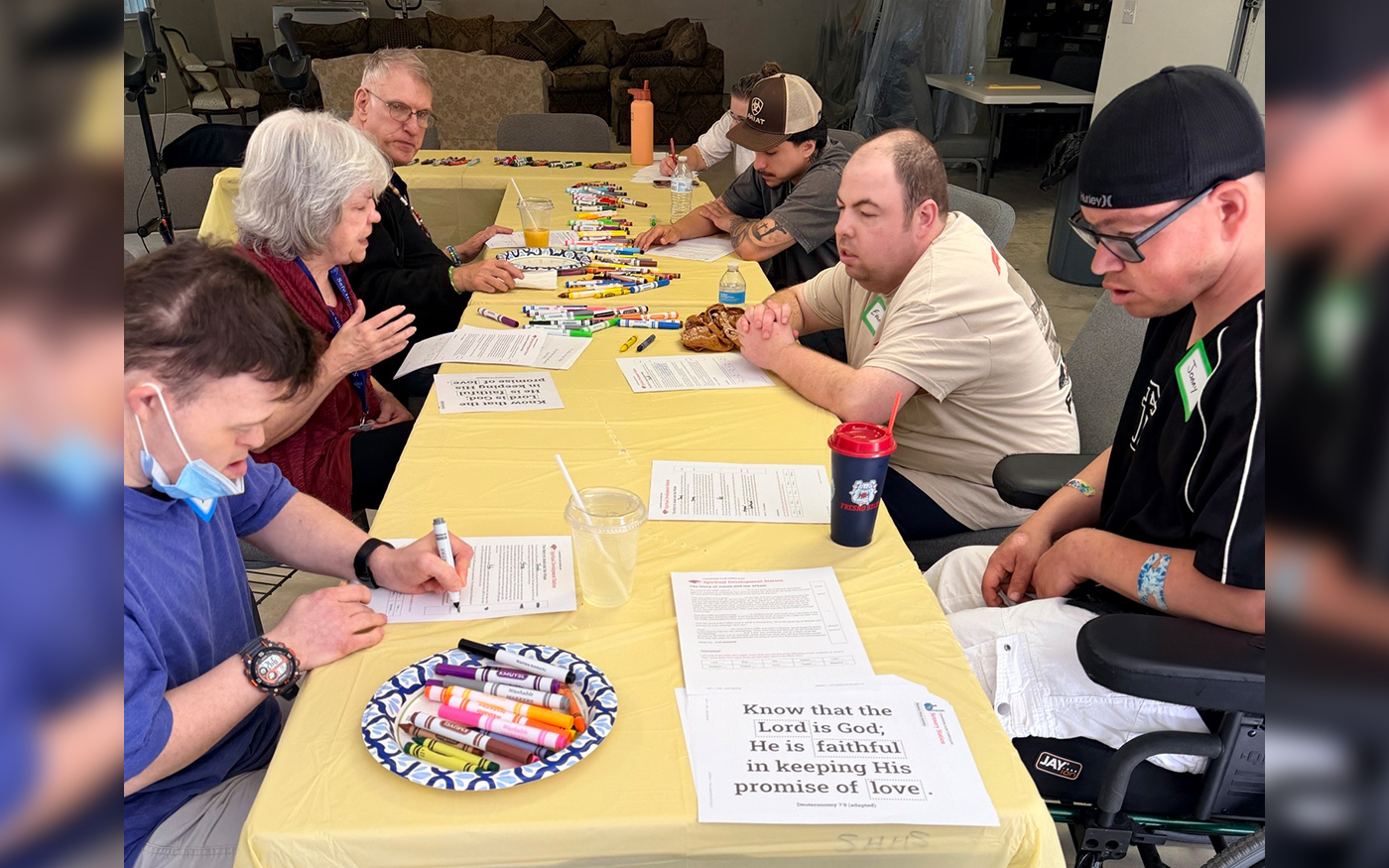
As of May, 2026, the ministry has expanded to launch Masterpiece Ministries, the district’s first church not only for, but also conducted by individuals with disabilities. In addition to his network responsibilities, Raffeo serves as CEO for Safe Harbor in Kingsburg, California, a home for adults with disabilities. Since Safe Harbor is already well-equipped to host the meetings, he began sharing the vision for such a church with the Kingsburg community. Every Kingsburg church has allowed him to speak, with several making referrals and encouraging people to volunteer.
Drawing from individuals living at Safe Harbor and in the community, the church serve team includes greeters, a talented guitarist and drummers, and some who can lead Bible lessons for services. Rhythm instruments are available as another avenue of participation; and a variety of alternative seating formats, such as couches and tables, help everyone find a comfortable way to fit in.
While there is an area for family members to relax on-site while their loved one enjoys church, those who wish to attend other area churches while the Safe Harbor service is in process may do so, knowing there will be qualified staff on hand.
On the first day of services, May 2, one of those parents was Karen, a mom who shared that it was the first time she had been able to attend her church without wondering about her son, Jonny. With tears of joy, she told the staff she hadn’t been to church in years because there was never a good space for them.
During the second week’s service, there was a strong move of the Holy Spirit during worship. “We saw one of the non-verbal guys lifting his hands to worship and trying to sing to the Lord,” says Raffeo. “Volunteers were so moved by the Holy Spirit and the experience that they began to weep.”
As the news spreads and the church grows, Raffeo hopes to develop small groups, putting the gospel at different cognitive levels while keeping the main service inclusive. Plans also include prayer walks through the Safe Harbor farm and gardens, pausing to pet animals, read a Scripture verse, or admire flowers.
In his network work, Raffeo hopes to continue providing opportunities for networking, to help churches grow their ministry as families get involved. Both he and Guerra are available to share with other districts considering a similar position.
“So many families out there are impacted by some type of disability,” says Raffeo, “and if churches commit to making the investment, we’re seeing that those families will come.”